#667 — September 30, 2026 |
|

Postgres Weekly |

|
|
Postgres 19 Beta 4 Released — Confirming recent developments, the latest beta is largely about what’s been removed, although numerous fixes have also made it in. A release candidate is due in the next couple of weeks, with the final release possibly in October if things go well. PostgreSQL Global Development Group |
💡 What's gone? SQL/PGQ (property graph) support, online enabling/disabling of checksums, temporal updates/deletes with |

SELECT count(*) Shouldn't Take Eight Seconds — A count or a rollup over millions of rows crawls, so you add indexes, a read replica, a nightly job. TimescaleDB extends the Postgres you already run so those queries return in milliseconds on live data. No warehouse. Get $1000 credit to start. Tiger Data (creators of TimescaleDB) sponsor |
|
What Radim Marek |
💡 |
|
IN BRIEF:
|
|
Can Your Postgres Survive a Bad Query? — ClickHouse compares what happens on four Postgres cloud providers (itself included) when queries eat all the RAM, and explains why setting Kevin Biju (ClickHouse) |
|
▶ Andres Freund on Where Linux Helps and Hurts Postgres — A candid talk from this year’s Kernel Recipes conference, aimed at kernel developers, covering topics like io_uring, huge pages, futexes, and atomic writes. Andres Freund |
|
📄 PgQ and PgQue: The Queue Engines You Might Need – Spotting bloated task tables and moving them to a purpose-built queue. Jobin Augustine (Percona) 📄 Fixing One Function's Disk Spills with 📄 When to Choose x86 or ARM for Postgres – Some pros and cons, if you're able to make the choice. Ahmed Darwich (PlanetScale) 📄 pgBackRest and Failover: Why |
|
|
🛠️ Tools and Releases |
|
|
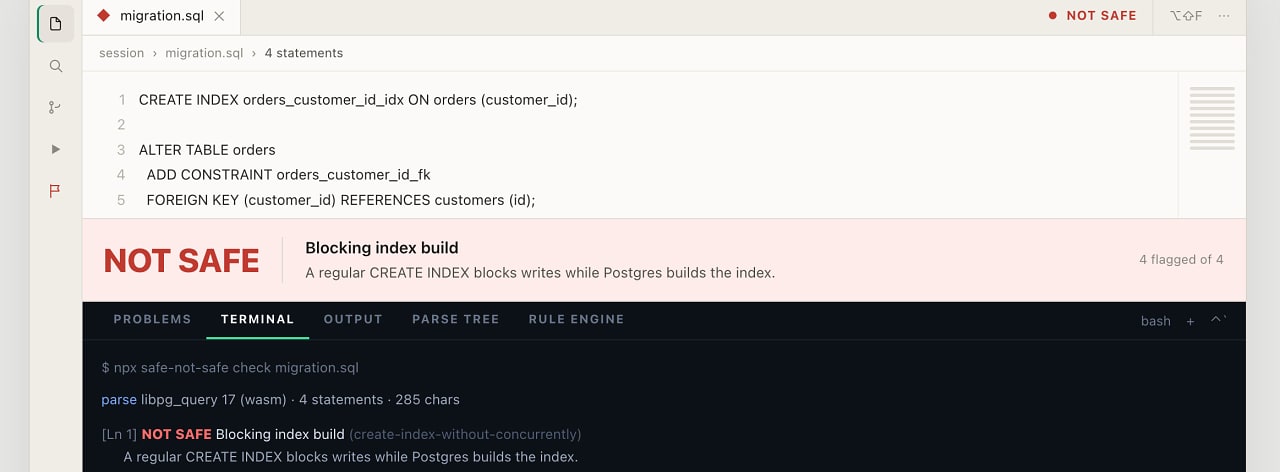
Safe Not Safe: Is My Migration Safe? — A fun side project from a former lead of Cloudflare's Postgres platform team, who spent years reviewing other teams' migrations. Paste in a SQL migration and it flags common problems, parsing entirely in the browser using Postgres's own SQL parser via WASM. Vignesh Ravichandran |
|
Kafgres 0.2: 700 MB/s of Kafka Throughput on Postgres — We featured this Kafka-compatible broker that runs inside Postgres a few weeks ago. Its author has since taken it from 113 MB/s to 700 MB/s write throughput on a single box. Raynor Elgie |
|
|
✨ And finally… |
|
|
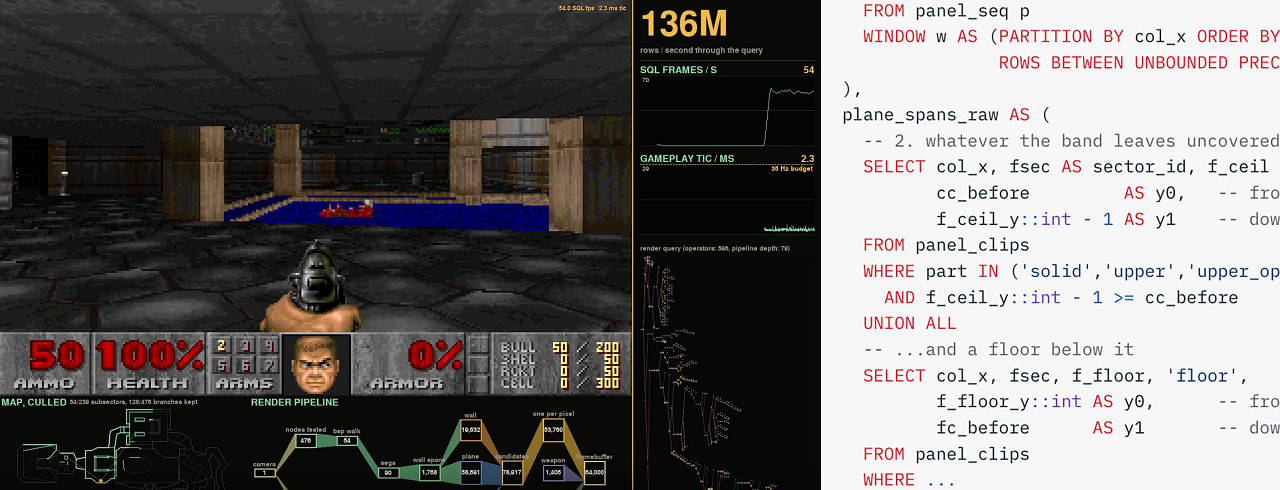
'We Ported the Original Doom to SQL' — Not quite Postgres, but a fun project from the team behind the Postgres-compatible CedarDB. It takes 1993's pioneering FPS and runs the logic and renderer in SQL, returning each frame as a bitmap for Python to show. Some neat architectural details (the renderer uses 89 CTEs!) and SQL queries here. Lukas Vogel (CedarDB) |
|
Got a new email? You can change your address here. Bored of us? Click here to stop getting Postgres Weekly. Got a link for us? Reply and tell us. We can't include everything but we'll look at anything you send. Thanks! Published by Cooper Press Ltd. Postgres, PostgreSQL and the Slonik Logo are trademarks or registered trademarks of the PostgreSQL Community Association of Canada. |